Environmental
Noise Surveys
Measured & assessed — on request.
Noise is one of the most common reasons a planning application attracts conditions or objections. We carry out measured noise surveys and impact assessments to BS 4142, BS 8233 and ProPG — giving planners the evidence they need and keeping your scheme on track.
- Assessments to BS 4142, BS 8233 & ProPG
- Planning-ready noise impact reports
- Practical mitigation advice included
4 Types
Of Survey
BS 4142
Industrial / Commercial
BS 8233
Residential Development
UK-wide
Coverage
What is an environmental noise survey?
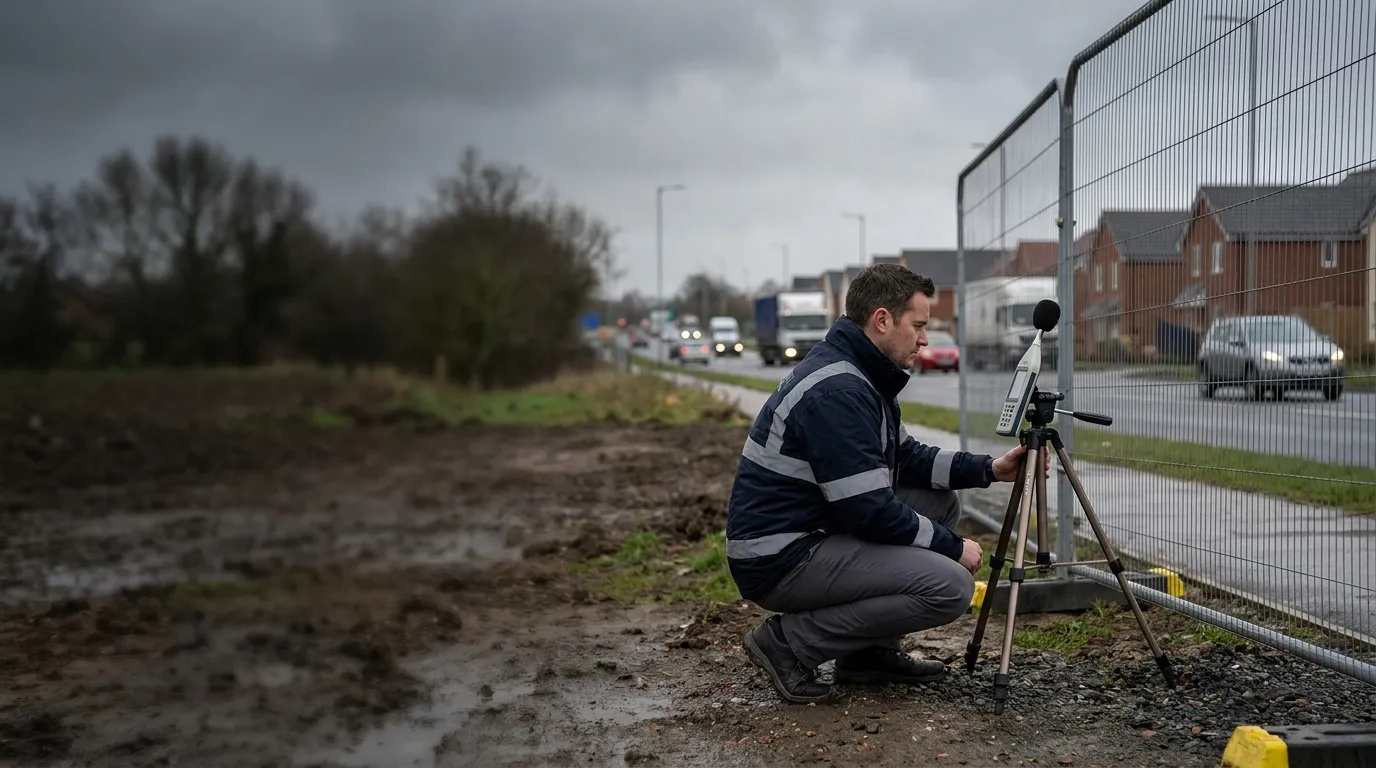
An environmental noise survey measures the existing noise climate at a site using calibrated sound level meters and assesses those measurements against the relevant British Standard. The result is a planning-ready noise impact assessment that tells the local planning authority whether the development is acceptable in noise terms.
Noise is one of the most frequently cited reasons a planning application attracts conditions or objections — particularly near roads, railways, industrial sites or licensed premises. A properly evidenced noise report removes that uncertainty and gives decision-makers a clear, objective basis on which to determine the application.
Why do I need one?
- Planning conditions: councils routinely require a noise survey to discharge conditions or support an application — particularly near roads, railways, industry or licensed premises.
- Protecting future occupants: demonstrates new homes will achieve suitable internal and external noise levels.
- Managing noise impact: shows a new commercial or industrial use will not unacceptably affect nearby residents.
Who commissions noise surveys?
Developers, architects and planning consultants needing noise evidence to support planning applications, discharge planning conditions, or satisfy an environmental health officer's requirements before determination.
Four survey types for every scenario.
From new residential development near a busy road to commercial uses affecting neighbouring homes — the correct standard and survey approach confirmed at quote stage.
Residential Development (BS 8233 / ProPG)
For new homes near roads, railways or other external noise sources. We measure the existing noise climate and assess it against BS 8233 internal noise level criteria and the ProPG guidance for good acoustic design of new dwellings.
- Baseline survey & BS 8233 assessment
- ProPG good-practice criteria
- Mitigation recommendations where needed
Commercial & Industrial Noise (BS 4142)
For planning applications where a new or changed industrial or commercial use may affect nearby residents. BS 4142 compares the specific sound level of the proposed source against the background noise level at the affected properties.
- Rating level assessment to BS 4142:2014+A1
- Background monitoring on site
- Significance conclusions for the planning report
Entertainment & Licensed Premises
Pubs, clubs, restaurants and other licensed venues require noise assessments to support licence applications and planning conditions. We measure existing background levels and assess proposed music or activity noise against them.
- Background & rating level surveys
- Internal & external noise sources
- Conditions-ready reporting
Road & Rail Noise
Residential development along major roads or near railway lines routinely attracts planning conditions requiring noise assessment. We carry out the baseline survey and assess results against BS 8233 / ProPG criteria, with glazing and ventilation recommendations where levels exceed targets.
- Attended & unattended monitoring
- BS 8233 / ProPG assessment
- Glazing & ventilation specifications
Planning to completion, one place.
Noise surveys assessed to the correct British Standard, joined up with acoustic design and sound insulation testing — so the assumptions in your noise report carry all the way through to the finished building.
Mitigation advice included
Practical mitigation recommendations are part of every noise impact report — glazing specifications, ventilation strategy, barriers and layout advice — not charged as a separate service.
Recognised British Standards
All surveys and assessments are carried out to the relevant standard for the project type — BS 4142, BS 8233, ProPG and associated guidance — producing reports that planners and local authority environmental health teams accept.
Measured Data, Not Assumptions
We attend site and measure the actual noise climate with calibrated equipment, so the assessment is grounded in real conditions rather than desk-study estimates.
Practical Mitigation Advice
Where measured levels require mitigation, we set out cost-aware, buildable solutions — glazing, ventilation, barriers, layout — as part of the report rather than as a separate service.
Joined-Up Acoustic Service
Noise surveys connect directly to our acoustic design and sound insulation testing services. Planning through to practical completion with one provider, one point of contact.
Planning-Ready Reports
Reports are written for the planning audience — structured to address the relevant condition or assessment framework, with clear methodology, results and conclusions for the decision-maker.
Nationwide Coverage
Developers, architects and planning consultants across England, Wales, Scotland and Northern Ireland. Fixed pricing, confirmed at quote stage.
Three steps to your noise impact assessment.
From briefing call to planning-ready report. The correct standard confirmed at the outset, survey scoped to what the condition or application actually requires.
Baseline Survey
We attend site and measure the existing noise climate over the appropriate period for the noise source and standard. Calibrated equipment, accurate data — no desk-study assumptions.
Assessment
The measured data is assessed against the relevant standard for your project type — BS 8233 / ProPG for residential development, BS 4142 for industrial or commercial sources. Where levels require mitigation, we set out the options.
Planning Report
You receive a full written noise impact assessment — methodology, measured data, assessment against the standard, mitigation recommendations and clear conclusions. Structured for the planning authority, ready to submit.
Fixed price, confirmed at quote stage.
Tell us your site location, the nature of the noise source, and the planning condition or application requirement. We scope the survey, confirm the applicable standard, and quote a fixed price for the survey, assessment and report.
Priced individually based on site location, the noise source type, the applicable standard, and the survey period required. Contact us with the details and we will quote a fixed price.
- On-site baseline monitoring with calibrated equipment
- Assessment to the applicable British Standard
- Mitigation recommendations included where needed
- Full written noise impact assessment for planning
Prices vary with site location, noise source type, survey duration and reporting requirements. Contact us for an accurate quote.
Get your noise survey quote
Tell us the site, the noise source, and the planning requirement. We confirm the applicable standard and quote a fixed price — no obligation.
Noise survey questions.
Everything you need to know about environmental noise surveys — which standard applies, how long a survey takes, and how mitigation works.
Still Got a Question? Ask Us Why do I need a noise survey for planning?
Planning authorities increasingly require noise evidence to show a development is acceptable — whether protecting new occupants from an existing noise source (road, railway, industry) or demonstrating a new commercial use will not unacceptably affect neighbouring residents. A measured survey to the relevant British Standard is the recognised way to satisfy that requirement.
Which standard applies to my project?
BS 8233 and the ProPG guidance apply to new residential development affected by road, rail or other external noise. BS 4142 is used to assess the impact of industrial or commercial noise on existing residential properties. We confirm the applicable standard at the outset, based on your project type and the nature of the noise source.
How long does a noise survey take?
It depends on the noise source and what the relevant standard or planning condition requires. Some sources — road traffic, for example — can be characterised with a relatively short survey period; industrial or intermittent sources may need monitoring over longer periods including nights and weekends. We scope this at quote stage so you know what to expect before we start.
What does a baseline noise survey involve?
We attend site and use calibrated sound level meters to measure the existing noise climate. Depending on the source and standard, this may include attended measurements, unattended monitoring over a set period, or both. The data is then assessed against the criteria for your project type and the findings written up in a planning-ready report.
Can you advise on mitigation?
Yes — where measured levels indicate that mitigation is needed, practical recommendations are included in the report. This typically covers glazing specification, mechanical ventilation, external noise barriers, or layout and orientation changes. The aim is always to give planners and developers cost-aware, buildable solutions.
Can noise surveys be combined with other acoustic services?
Yes. We can join up noise surveys with acoustic design (specifying compliant building envelopes and internal layouts) and sound insulation testing (Part E compliance at practical completion). Keeping all three services with one provider saves time and avoids conflicts between the survey assumptions and the design.
What types of project require a noise survey?
Residential development near roads, railways, industry or licensed premises; commercial or industrial uses near existing homes; entertainment and licensed premises applications; and any project where a planning condition requires noise to be assessed or discharged. If you are unsure whether your project needs one, contact us and we will advise.
Do you cover the whole of the UK?
Yes — noise surveys and assessments are delivered across England, Wales, Scotland and Northern Ireland. Tell us the postcode and we will confirm availability at quote stage.