Legionella
Risk Assessments
ACOP L8 compliant — landlords & businesses.
Professional Legionella risk assessments for landlords and business owners across the UK. We help you meet your legal obligations under HSWA, COSHH and ACOP L8 — protecting occupants and your compliance records.
- Full system mapping & temperature checks
- Clear written compliance report
- Graded risks & practical recommendations
ACOP L8
HSE Standard
20–45°C
Bacteria Growth Range
On Request
Quoted Per Property
UKwide
Nationwide Coverage
What is a Legionella risk assessment?
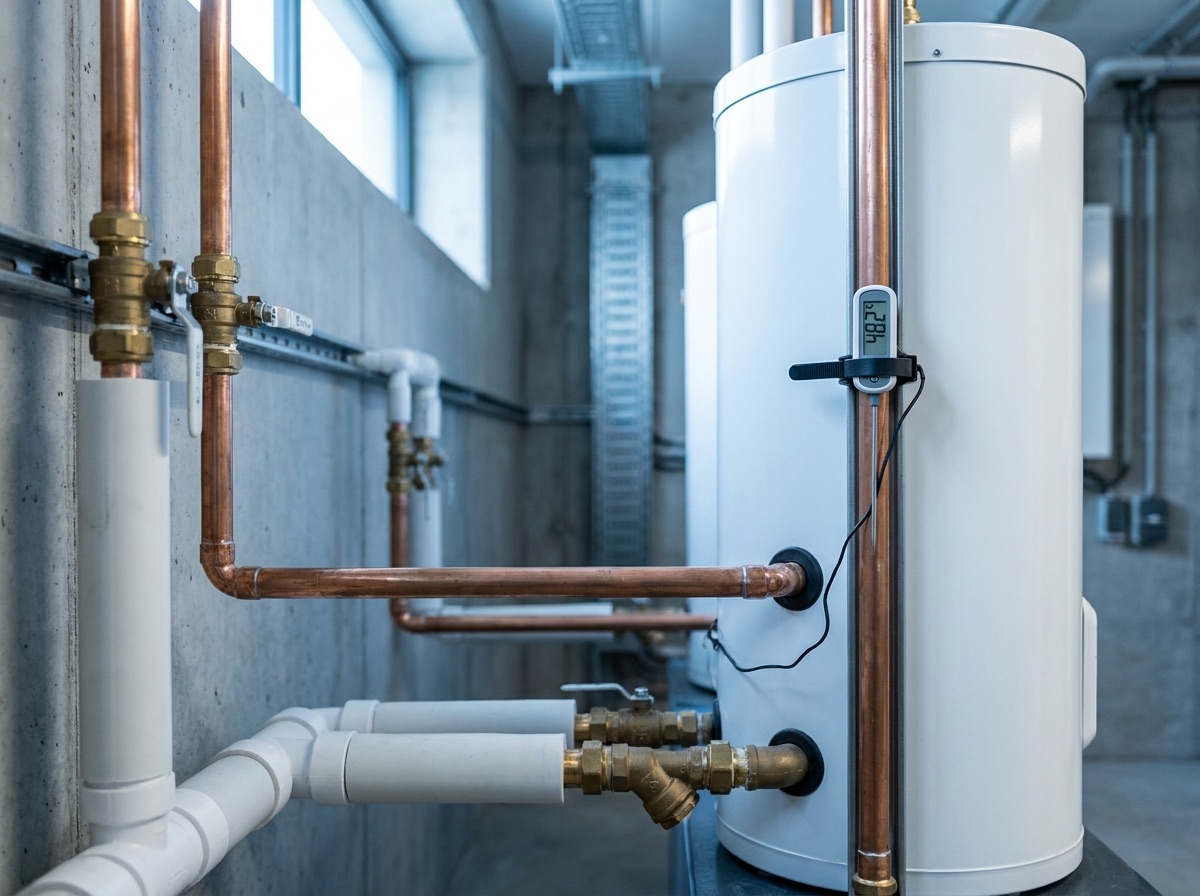
A Legionella risk assessment is a systematic inspection of a building's water system to identify conditions that could allow Legionella bacteria to multiply and put occupants at risk of Legionnaires' disease — a severe and potentially fatal lung infection.
Legionella bacteria are found naturally in water and thrive between 20°C and 45°C. In building water systems — particularly those with stagnant sections, warm storage tanks or infrequently used outlets — the conditions for dangerous proliferation can develop quickly without proper controls.
What is the legal requirement?
Under the Health & Safety at Work Act 1974 (HSWA) and the Control of Substances Hazardous to Health Regulations 2002 (COSHH), conducting a Legionella risk assessment is a mandatory legal requirement for anyone in control of a premises. ACOP L8 (Approved Code of Practice) and HSG274 guidance set out exactly how this duty must be fulfilled. Whether you manage a single rental property or a large commercial complex, you must identify and manage the risk.
What does our survey cover?
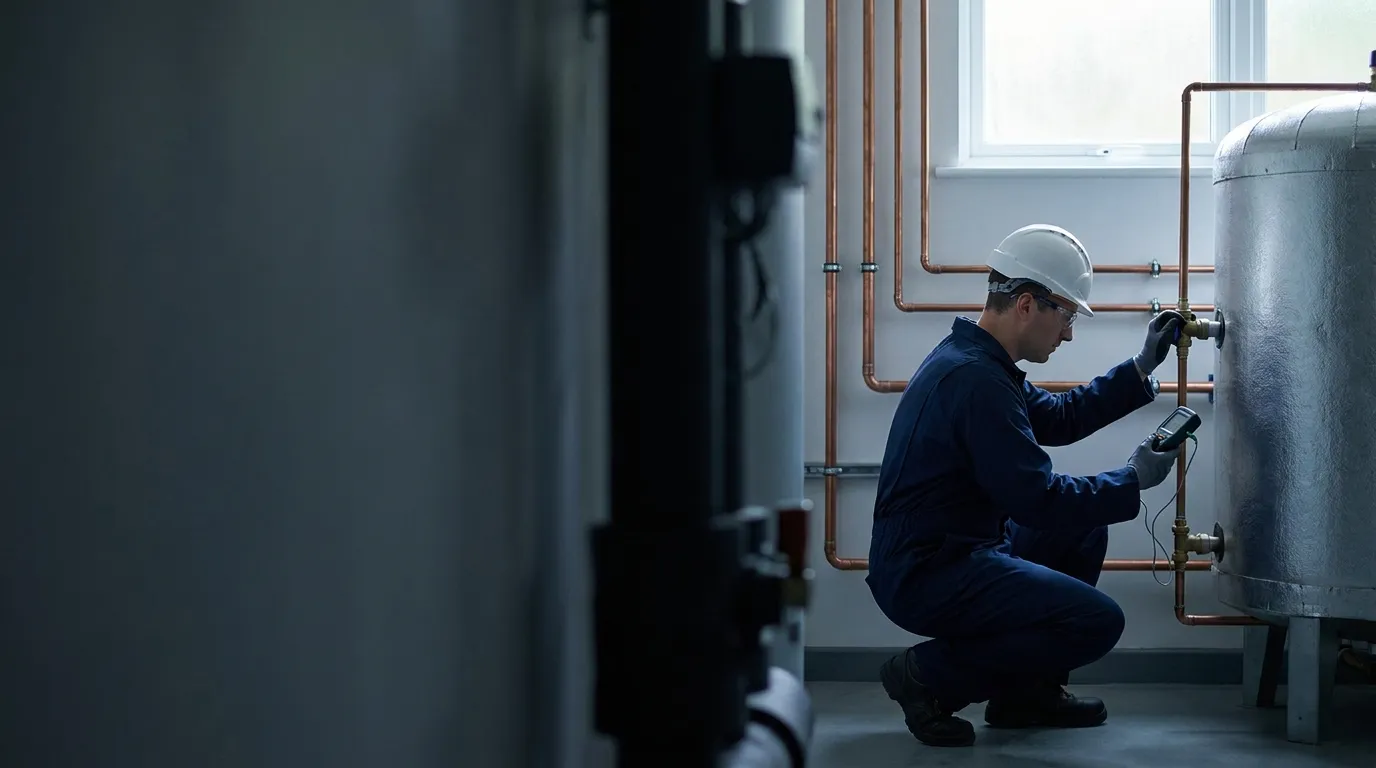
We carry out a full system mapping of your building's water infrastructure, temperature and stagnation checks to identify "dead legs" and optimal bacterial growth conditions, and a rigorous inspection of all water assets including taps, showers, pipework and water storage tanks. You receive a clear, actionable compliance report — not a generic template.
Where Legionella risk hides.
Six of the most common locations where our surveyors find elevated Legionella risk — any of these in your building warrants a thorough assessment.
Dead Legs & Low-Use Outlets
Sections of pipework that rarely see flow allow water to stagnate at temperatures where Legionella multiplies rapidly. Identifying and eliminating dead legs is a key priority.
Cold Water Storage Tanks
Cold water tanks with inadequate insulation, lids or infrequent turnover can warm above 20°C — the threshold at which Legionella begins to proliferate.
Hot Water Cylinders & Calorifiers
Hot water stored below 60°C provides ideal growth conditions. Thermostatic mixing valves (TMVs) set too low at outlets are a common problem in both domestic and commercial settings.
Showers & Infrequently Used Taps
Showers produce fine aerosol droplets — the primary inhalation route for Legionella. Taps and showers in guest rooms or rarely occupied properties are especially high risk.
Cooling Towers & Evaporative Condensers
Open-circuit cooling systems are the highest-risk category — Legionella outbreaks are frequently traced to cooling towers. Rigorous monitoring, dosing and maintenance plans are essential.
Spa Pools & Decorative Fountains
Any recirculating water feature that generates aerosol can present a Legionella risk. Regular disinfection, monitoring and records are required under ACOP L8.
Technical depth, clear reporting.
We don't just tick boxes — we provide a thorough analysis of your water system with graded risks and practical, prioritised recommendations so you know exactly what to do next.
Actionable reporting included
Graded risk categories and step-by-step recommendations are included in every report — no extra charge for interpretation or follow-up guidance.
Expert Technical Assessment
Our team carries out a deep-dive technical analysis of your water system — not a tick-box exercise. Full system mapping, temperature checks, dead-leg identification and equipment inspection.
Clear Compliance Report
You receive a written report that identifies specific risks, grades their severity, and provides step-by-step practical recommendations. Essential for your compliance records.
ACOP L8 & COSHH Aligned
All assessments are conducted in accordance with HSE ACOP L8, COSHH Regulations 2002 and HSG274 guidance — the documents a court or enforcing authority will refer to.
Prioritised Recommendations
We categorise risks so you know exactly which issues to address first. Practical, actionable guidance rather than a generic checklist.
Suitable for Landlord Records
The report serves as formal documentary evidence of your proactive health and safety management — suitable for tenant records, managing agents and regulatory inspection.
Nationwide Coverage
Residential lettings, commercial premises, multi-occupancy buildings and large commercial complexes covered across England, Wales, Scotland and Northern Ireland.
Three steps to your compliance report.
From first contact to written compliance report in hand — a simple, straightforward process designed around your schedule.
Tell Us About Your Property
Property address, type (residential or commercial) and a brief description of the water system. We confirm the scope, price and an available date that suits you.
We Survey On Site
Our surveyor visits the property, maps the full water system, checks temperatures, identifies dead legs and stagnation points, and inspects all water assets including tanks, taps and showers.
Report & Recommendations
You receive a clear written compliance report identifying specific risks, grading their severity, and providing step-by-step recommendations. Suitable for your records and for demonstrating legal compliance.
Quoted per property.
Send us the property address and a brief description of the water system and we will provide a fixed-price quotation. Pair with our Asbestos Survey for a complete landlord compliance package.
Pricing is quoted per property based on building size and complexity of the water system. Contact us with the address and we will confirm the fixed price.
- Full system mapping & temperature checks
- Written compliance report included
- Graded risks & practical recommendations
- Residential & commercial properties covered
Pricing depends on property type, size and water system complexity. Contact us for an accurate quote.
Get your Legionella assessment quote
Takes 60 seconds. No obligation. Need to meet a compliance deadline? Tell us — we'll prioritise your booking.
Legionella questions.
Everything you need to know about Legionella risk assessments — legal requirements, who needs one, what the survey involves, and how often you need to review.
Still Got a Question? Ask Us Is a Legionella risk assessment a legal requirement?
Yes. Under the Health & Safety at Work Act 1974 (HSWA) and the Control of Substances Hazardous to Health Regulations 2002 (COSHH), anyone in control of a premises — whether a landlord, business owner or facilities manager — has a legal duty to assess and manage the risk of Legionella. ACOP L8 (Approved Code of Practice) sets out the specific guidance you must follow.
Who needs a Legionella risk assessment?
Landlords (residential and commercial), business owners, facilities managers, housing associations, schools, care homes, hotels and any other person or organisation in control of a building with a hot and cold water system. This includes single rental properties as well as large commercial complexes.
What does the assessment involve?
Our surveyor visits the property and carries out a full system mapping of the water infrastructure, temperature checks on hot and cold water, identification of stagnant "dead legs" and low-use outlets, and a thorough inspection of tanks, cylinders, taps, showers and pipework. You receive a written report identifying specific risks, grading their severity, and providing practical recommendations.
How often should a Legionella risk assessment be reviewed?
The HSE recommends reviewing a Legionella risk assessment whenever there is reason to believe it is no longer valid — for example after a change in water system, significant building alterations, or if Legionella bacteria are detected. As a general rule, residential landlords should review the assessment on each change of tenancy and at least every two years.
What is Legionnaires' disease and how serious is it?
Legionnaires' disease is a severe form of pneumonia caused by inhaling small droplets of water contaminated with Legionella bacteria. It can be fatal, particularly in older people or those with underlying health conditions. The bacteria thrive in water systems held between 20–45°C, making poorly maintained or infrequently used plumbing a particular risk.
What is ACOP L8 and does my property need to comply?
ACOP L8 (Legionnaires' disease: The control of Legionella bacteria in water systems) is the HSE's Approved Code of Practice. It has special legal status — if you are prosecuted for failing to comply with the Health & Safety at Work Act, a court will take non-compliance with ACOP L8 as evidence that you have fallen below the required standard. All businesses and landlords with water systems must comply.
How long does the assessment take?
For a straightforward residential property, the site visit typically takes 1–2 hours. Larger commercial buildings with more complex water systems will take longer. The written report is usually delivered within a few working days of the visit.
How much does a Legionella risk assessment cost?
Pricing is quoted per property and depends on the size of the building and complexity of the water system. Contact us with the property details and we will provide a fixed-price quotation.
Do you cover the whole of the UK?
Yes — we carry out Legionella risk assessments across England, Wales, Scotland and Northern Ireland. Tell us the postcode and we will confirm availability at quote stage.