Following the release of the long-awaited Future Homes Standard, the government has provided critical updates on how Building Regulations Part L 2026 will be brought in.
Compliance is getting tougher, and understanding the transition arrangements is the difference between a smooth project and a costly redesign. Here is what developers and architects need to know about the shift from Part L 2021 to the new 2026 standards.
Key dates: when does Part L 2026 go live?
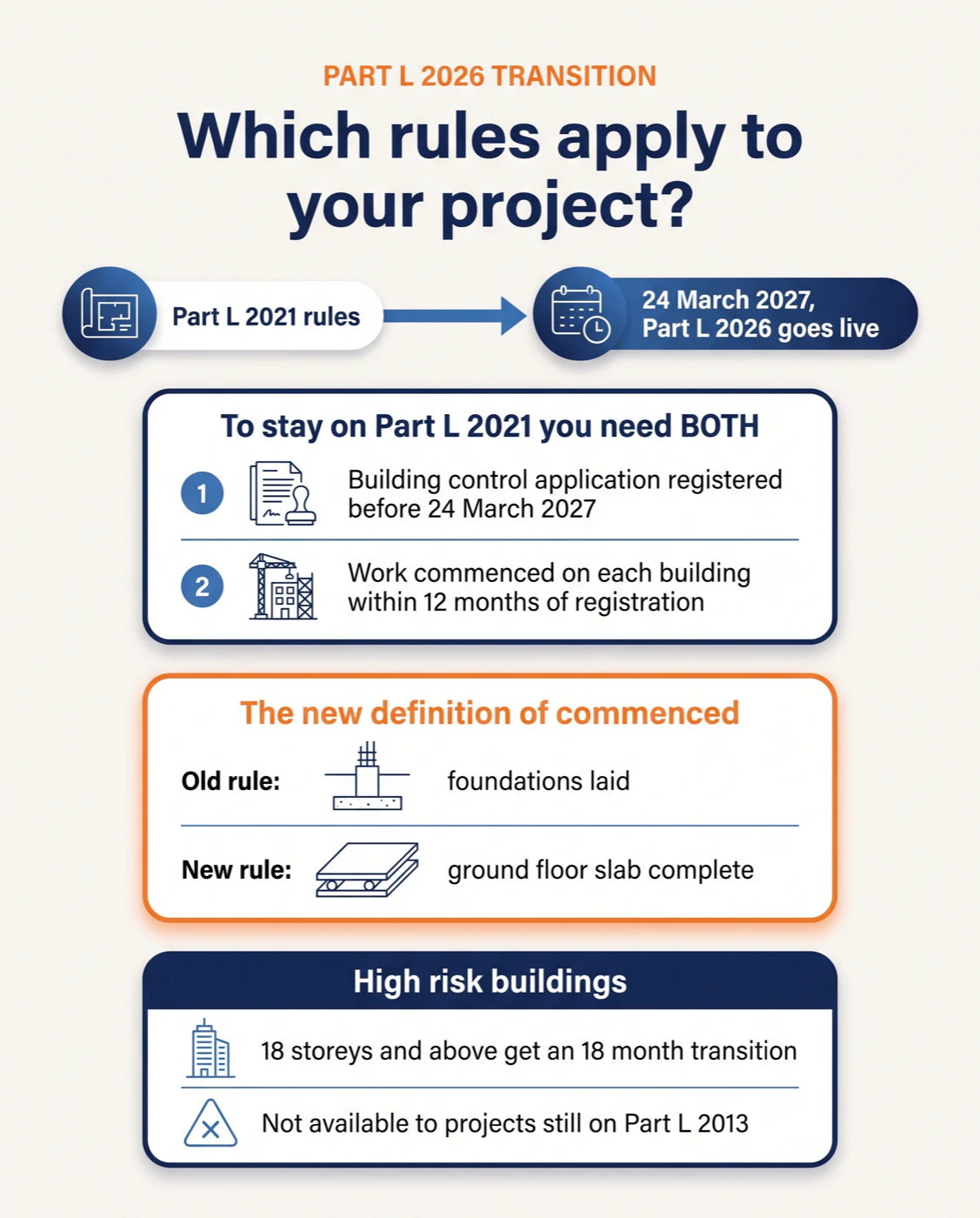
The new Part L 2026 regulations officially go live on 24 March 2027.
As with the 2021 update, there is a 12 month transition period. It is designed to give the industry time to adapt to the new requirements, which include the move towards the Home Energy Model (HEM), the successor to traditional SAP calculations.
For a plain English summary of what actually changes in the standard itself, see our companion guide: Part L 2026, the 5 Ws.
How the Part L transition period works
To be assessed under the previous Part L 2021 standards, your project has to meet two strict criteria:
- Application date. The building control application must be registered before 24 March 2027.
- Commencement date. Work must physically commence on each building within 12 months of that registration.
Miss either one and the building falls under Part L 2026, with everything that brings: mandatory solar PV, no fossil fuel heating and a tighter air tightness benchmark.
The new definition of “commenced”
One of the biggest changes in the 2026 update is how commencement is defined.
- Old rule. Having the foundations laid was often enough for a building to be deemed commenced.
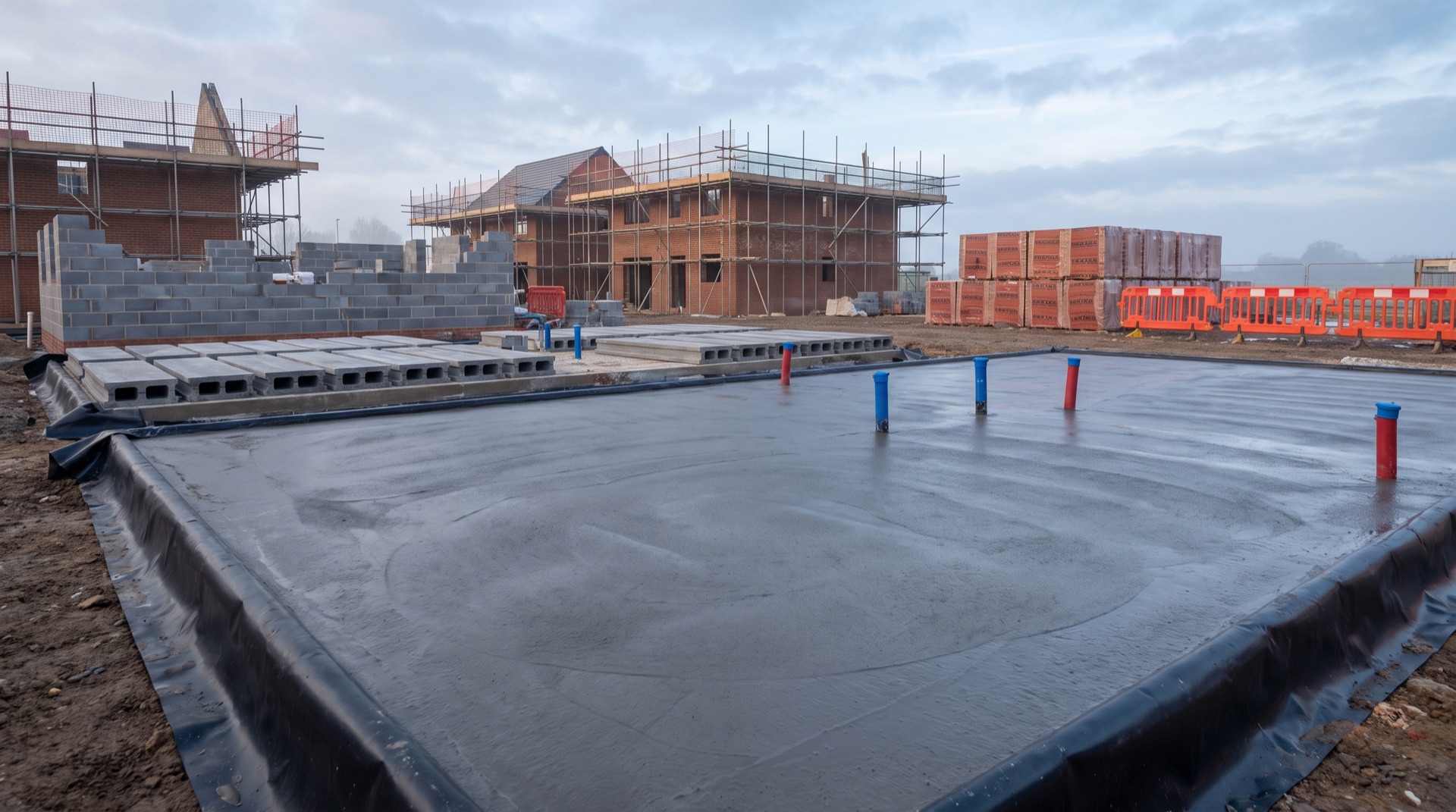
- New rule. Commencement now requires the ground floor slab to be complete.
That is a meaningful shift in programme terms, and it is worth checking against your build sequence now rather than in early 2027.
Plot versus block. The definition of a “building” does not always mean an individual plot. For flats and terraced housing, commencement can often be classed at block level.
Exceptions: high risk buildings
There is a separate transition period of 18 months for high risk buildings.
- Definition. High risk buildings are those of 18 storeys or more.
- Exclusion. These extended arrangements do not apply to projects still registered under the older Part L 2013 standards.
Future-proof your project with UKBC
As the industry moves towards SAP 10.3 and the Home Energy Model, the compliance route on a new site can feel like a minefield. At UK Building Compliance we do the technical work and tell you plainly where you stand.
Our accredited SAP service includes:
- Unlimited specification revisions. We keep tweaking the design until the numbers work.
- Unlimited expert advice. Direct access to our assessors whenever you have a question.
- Free Dashpivot app. Seamlessly collate your site photo evidence for Part L sign off.
Ready to get started? Get a quick quote online or call our experts on 01455 634855.