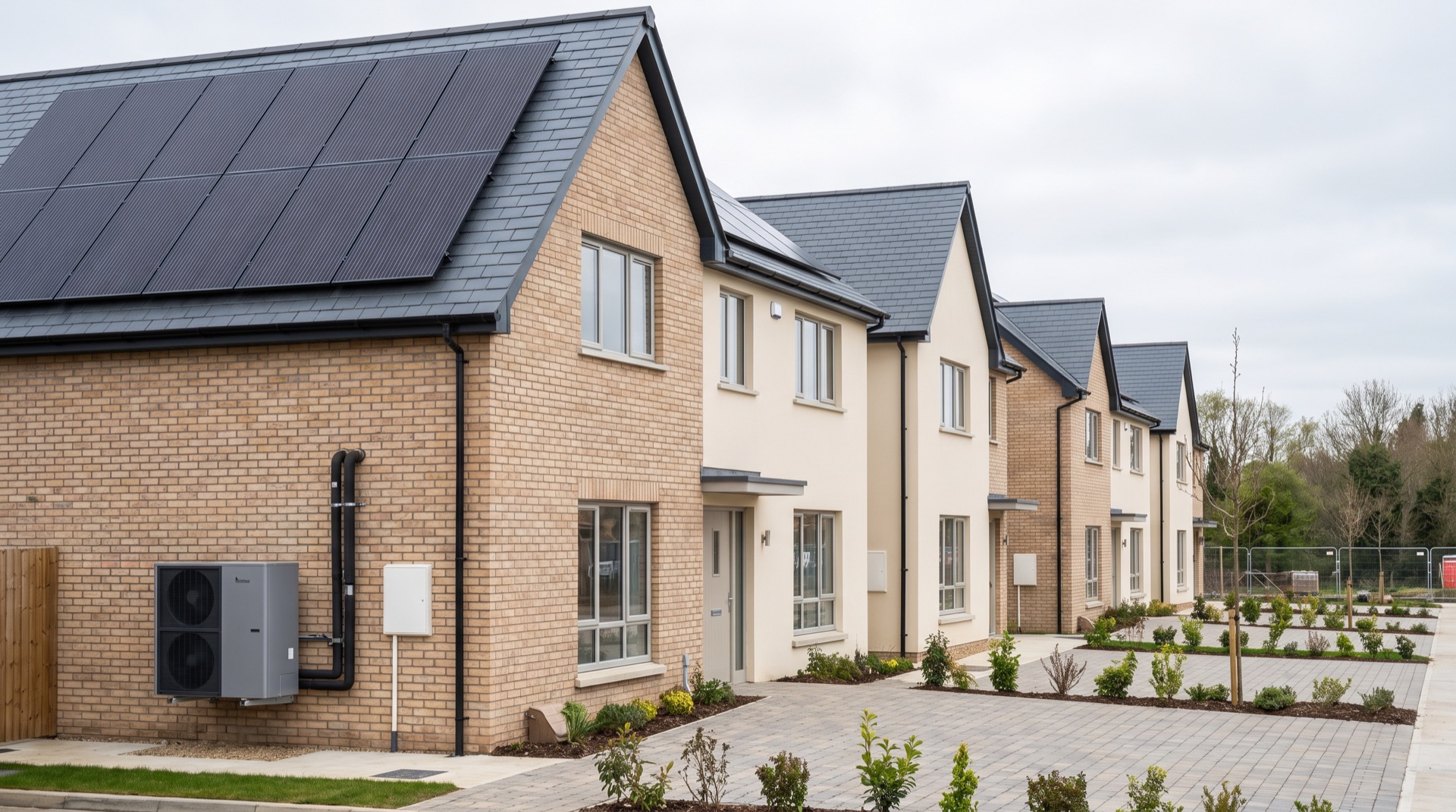
The long-awaited Future Homes Standard (FHS) has finally been released, arriving alongside the updated Approved Document Part L 2026.
At UK Building Compliance we know that shifting regulations can feel like a moving target, so we have broken the core changes down using the “5 Ws” framework.
1. When does Part L 2026 and the Future Homes Standard go live?
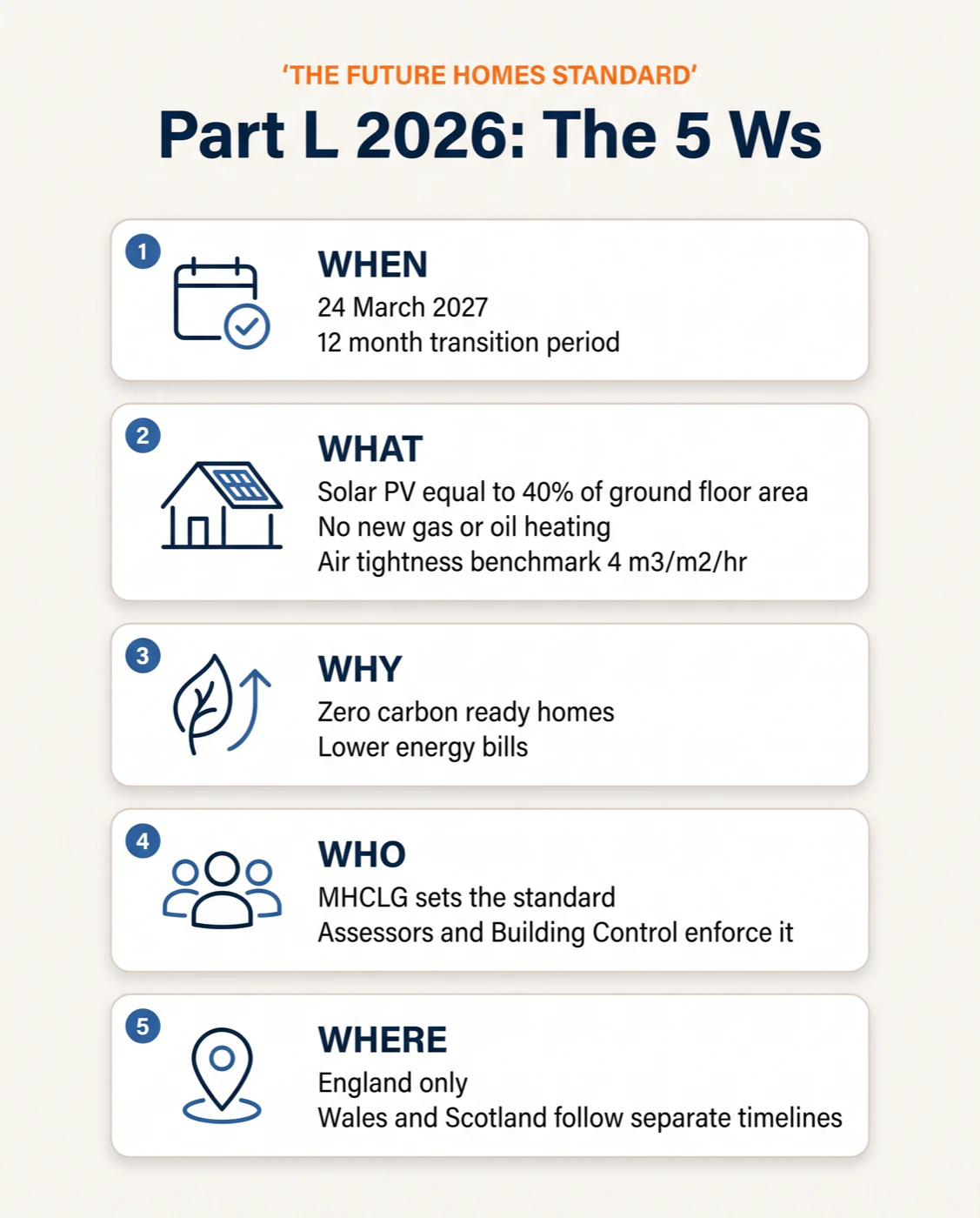
The new Part L 2026 regulations officially go live on 24 March 2027. Following the pattern of previous updates, a 12 month transition period will apply to help the industry adjust.
Technically the transition begins with SAP 10.3. The government does, however, plan to introduce the Home Energy Model (HEM) further down the line to replace SAP entirely. The HEM holds the same high standards, but it is a significant shift in assessment methodology and needs far more detailed data at design stage.
If you want the detail on how the transition works in practice, and what counts as having “commenced” a building, read our companion guide: Which rules apply to your project?
2. What are the key technical requirements?
The 2026 standards introduce several game changers for residential development:
- Mandatory solar PV. Solar panels become a core requirement. You need an array equivalent to 40% of the property’s ground floor area.
- The end of fossil fuels. Gas and oil heating systems will no longer comply. Low carbon heat pumps are not mandatory by name, but they will be the only realistic heating option for the vast majority of projects.
- Tighter fabric standards. U-value requirements stay as they are under Part L 2021, but the air tightness notional benchmark tightens from 5 m³/m²/hr down to 4 m³/m²/hr.
- Harder efficiency targets. Meeting the Target Fabric Energy Efficiency (TFEE) becomes more challenging as a result of those tighter benchmarks.
3. Why is the Future Homes Standard being introduced?
The primary goal of the FHS is to make sure every new UK home is zero carbon ready. As the UK electricity grid decarbonises, these homes reach zero carbon status automatically, with no expensive or disruptive retrofit needed later.
Beyond the environmental goal, the changes are a pillar of the UK Net Zero Strategy. They are intended to improve national energy security and, importantly for your buyers, reduce household energy bills.
4. Who is responsible for these changes?
The standard was introduced by the Ministry of Housing, Communities and Local Government. Day to day implementation falls to:
- Accreditation bodies. Organisations such as Elmhurst Energy manage the framework.
- Qualified assessors. Our team at UKBC carries out the technical assessments.
- Building control. They remain the final enforcers of the regulations on site.
5. Where do these new regulations apply?
These specific changes apply to England only. Welsh Part L and Scottish Section 6 run on their own separate timelines, with further updates expected for those regions in future.
Navigate the transition with UKBC
Compliance is getting tougher, and there are plenty of caveats and exceptions inside the new rules. That is where we come in.
Our SAP calculation service is built to take the guesswork out of it:
- Unlimited specification revisions. We keep tweaking the design until the numbers work.
- Unlimited expert advice. Direct access to our assessors whenever you have a question.
- Free Dashpivot app. Simple collation of your site photo evidence for Part L sign off.
Ready to future-proof your next project? Get a quick quote online or call our team on 01455 634855.