

When you’re planning a new build, an extension, or a conversion, the to-do list can quickly become overwhelming. Between managing architects, interpreting building regulations, and coordinating contractors, it is easy to get bogged down in unanswered questions.
For many of our clients, the first step toward clarity is simply picking up the phone.
That initial conversation might only take a few minutes, but it sets the tone for your entire project, turning a stressful compliance checklist into a straightforward, manageable plan.
What happens when you ring UKBC?
You speak to a real person who works out what your project actually needs. As the first point of contact at UK Building Compliance, my role is about much more than answering calls. People often ring us without knowing exactly which services they need, and that is completely understandable. Building regulations can feel like a total minefield if you aren’t dealing with them every day.
Having previously worked within a property development company, I know firsthand how compliance pressures look from a client’s perspective.
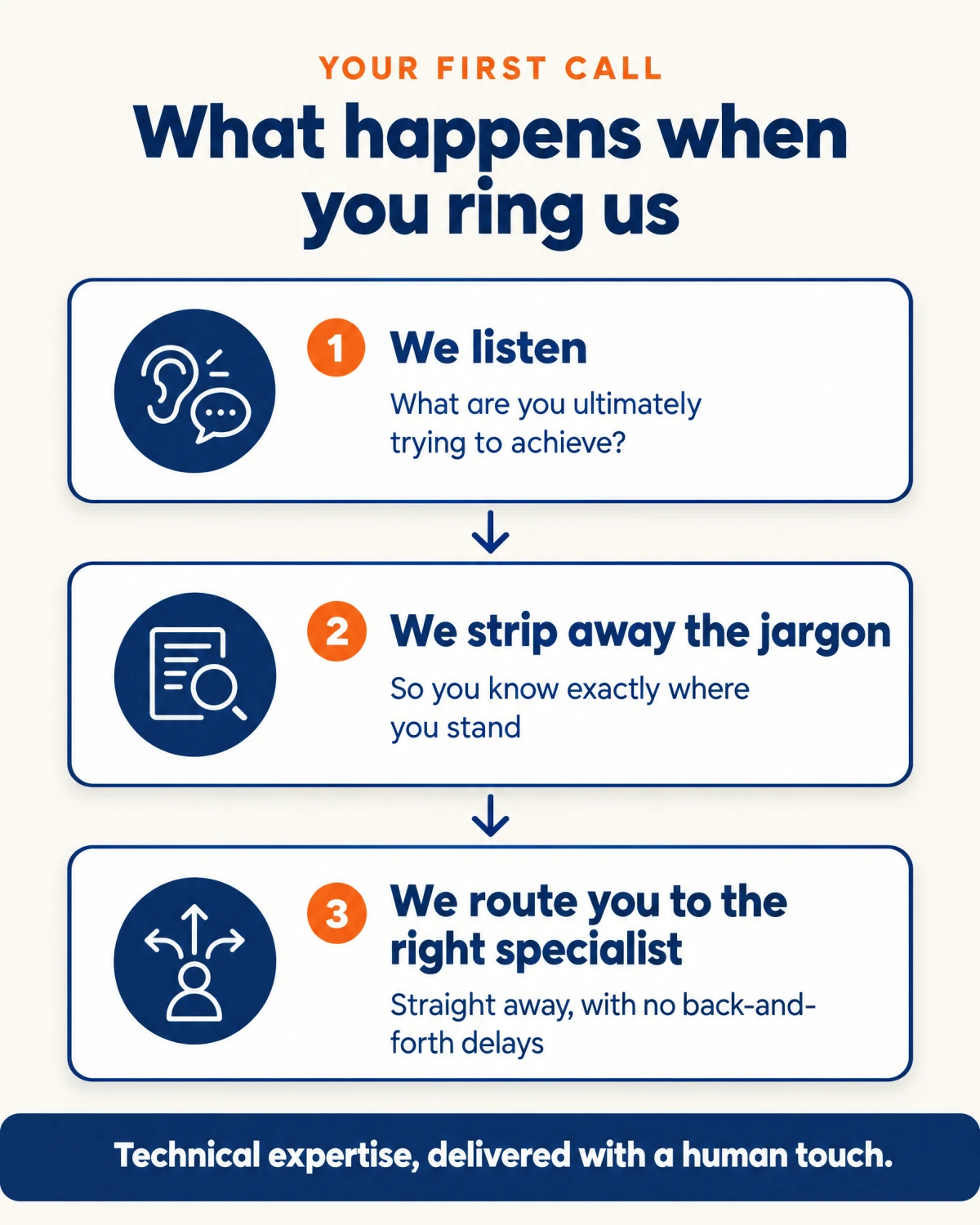
My job is to:
- Listen to what you are ultimately trying to achieve.
- Strip away the technical jargon so you know exactly where you stand.
- Route your project to the right specialist immediately, cutting out back-and-forth delays.
Why does the first call matter? A real example
Recently, a client rang us asking for a SAP calculation. It was a sensible request, but during the call our team realised the project would also need a Part O overheating assessment, something the client hadn’t considered.
When the assessment was carried out, the design failed. Because we had caught it right at the start, our expert team was able to outline several options for achieving compliance while the design could still be adjusted easily.
Had this been missed on that first call and only raised by Building Control at the end of the project, the building would not have complied. The client would have been facing very expensive, time-consuming remedial works.
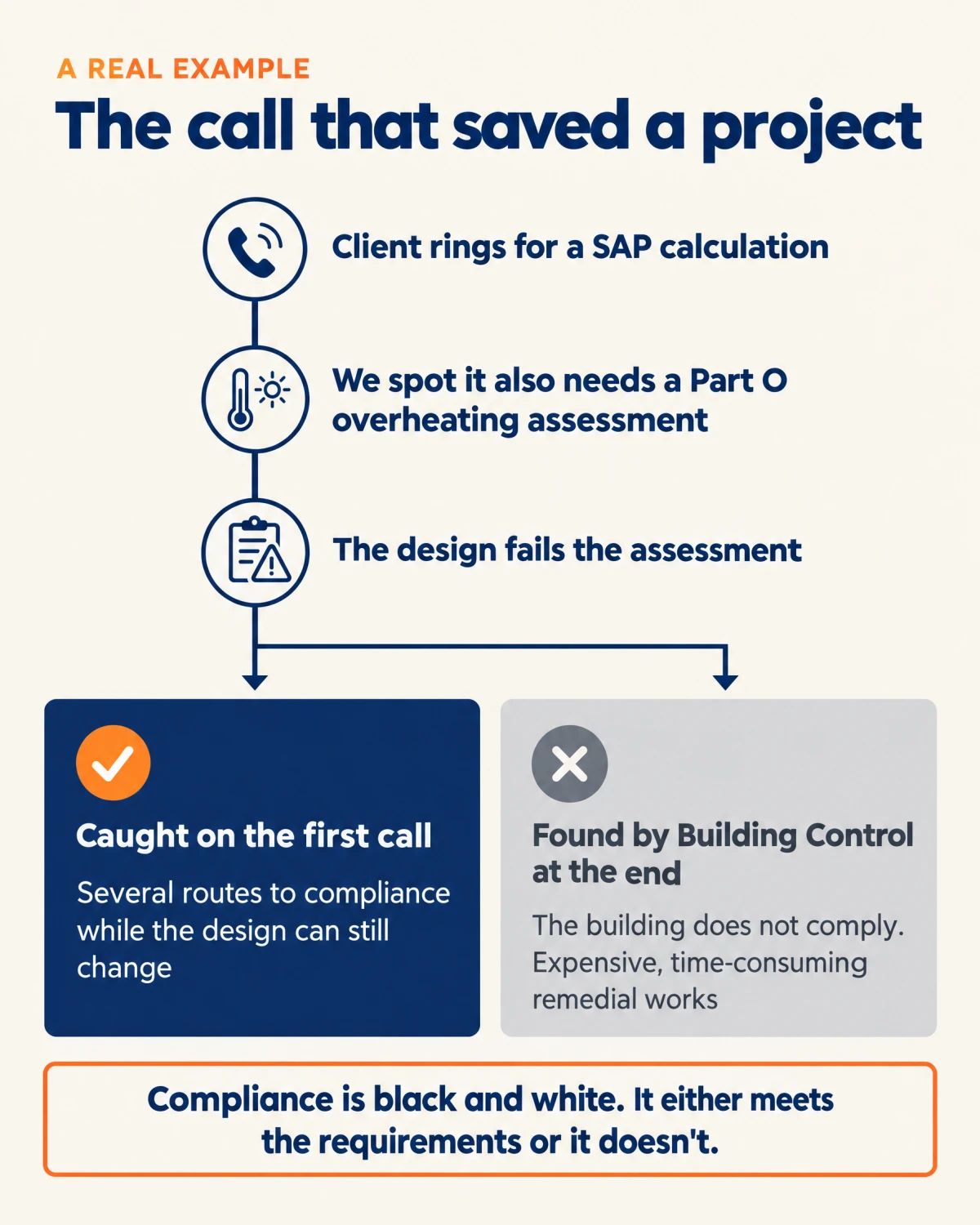
Our team spots issues like this on first calls all the time. It isn’t about upselling. Compliance is black and white: a building either meets the requirements or it doesn’t, and our job is to make sure you understand exactly what you need before it becomes a big problem.
Why SAP and Part O belong in the same conversation
A SAP calculation shows that a new dwelling meets Part L of the Building Regulations for energy efficiency. Part O is a separate requirement, introduced in 2022, that limits overheating in new residential buildings. It is assessed either by the Simplified Method or by CIBSE TM59 dynamic thermal modelling.
The two are easy to treat as one job, but they are not. Both are best done at design stage, when glazing, shading and ventilation can still change on paper. See our Part O common questions, or check your own scheme with the free Part O overheating check.
Can I just call to talk a project through?
Yes. Not every call is about booking a test or assessment immediately. Often, a client just needs to talk a project through. We regularly speak with builders and developers who are:
- Confused about which compliance rules apply to their project.
- Unsure at what stage an air tightness or sound test needs to take place.
- Worried that their desktop assessments, such as SAP calculations, could fail. Our free SAP check gives a quick first answer.
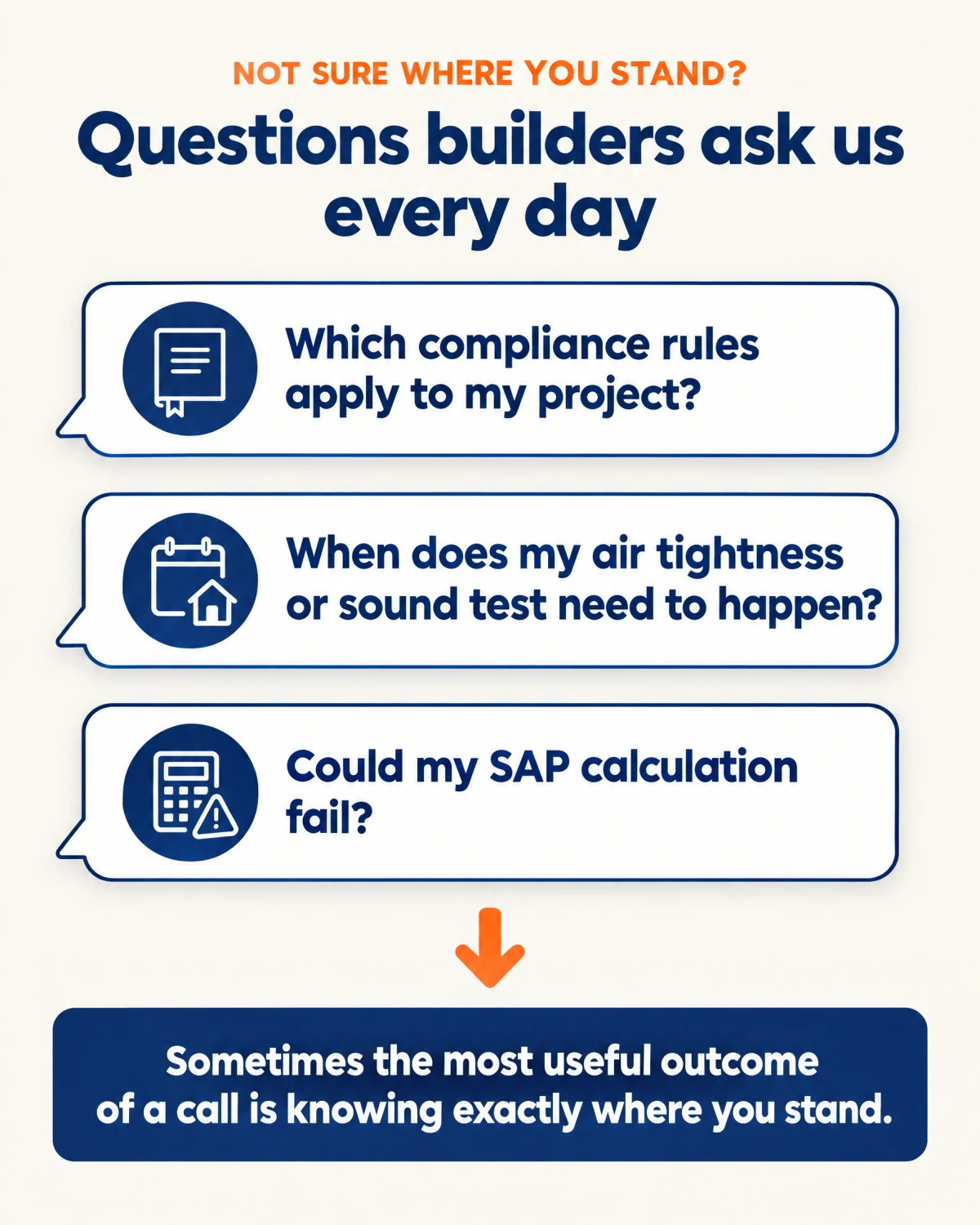
In those moments, having a real, knowledgeable person to talk to is invaluable. Sometimes the most useful outcome of a call is simply knowing exactly where you stand.
Ready to start your next project with a team that listens?
Building regulations don’t have to be a headache. Whether you are planning a small domestic extension or managing a multi-plot development, Jo and the team are here to guide you through the compliance journey smoothly.
- Prefer a quick chat? Give Jo and the customer care team a call directly on 01455 634855 to talk your project through.
- Need an exact price fast? Use our online form to get a quote in 60 seconds. We offer transparent, fixed pricing upfront with absolutely no hidden fees.
UK Building Compliance: technical expertise, delivered with a human touch.
Frequently asked questions
Do I need a Part O assessment as well as a SAP calculation?
For a new residential building in England or Wales, usually yes. A SAP calculation shows your design meets Part L for energy efficiency, while Part O is a separate requirement that limits overheating. Part O applies to new dwellings, student accommodation, care homes and similar buildings where people sleep. It does not apply to extensions or change of use projects.
When should a Part O overheating assessment be done?
At design stage, ideally alongside the design SAP calculation and before construction starts. That is when glazing sizes, shading and openable windows can still be changed cheaply. Left until the end, the remaining options are far more limited and far more expensive.
What happens if a design fails Part O?
With the Simplified Method, the usual fix is adjusting the glazing or ventilation design. If the design can't change, a CIBSE TM59 dynamic thermal model can be used instead. It accounts for shading, glazing specification and ventilation strategy, and often shows compliance where the Simplified Method does not.
When do air tightness and sound tests take place?
The final tests are carried out at completion, once the building envelope and the separating walls and floors are finished, and before building control sign-off. An optional first-fix air test, before the plasterboard goes up, lets you find leaks while they are still cheap to fix.
Is calling UKBC just a sales call?
No. Many calls are simply about talking a project through. Compliance is black and white: a building either meets the requirements or it doesn't, so the aim of the call is to make sure you know exactly what you need before it becomes a problem.
How do I get a price for my project?
Call the customer care team on 01455 634855 to talk it through, or use the online quote form for an exact, fixed price in about 60 seconds, with no hidden fees.